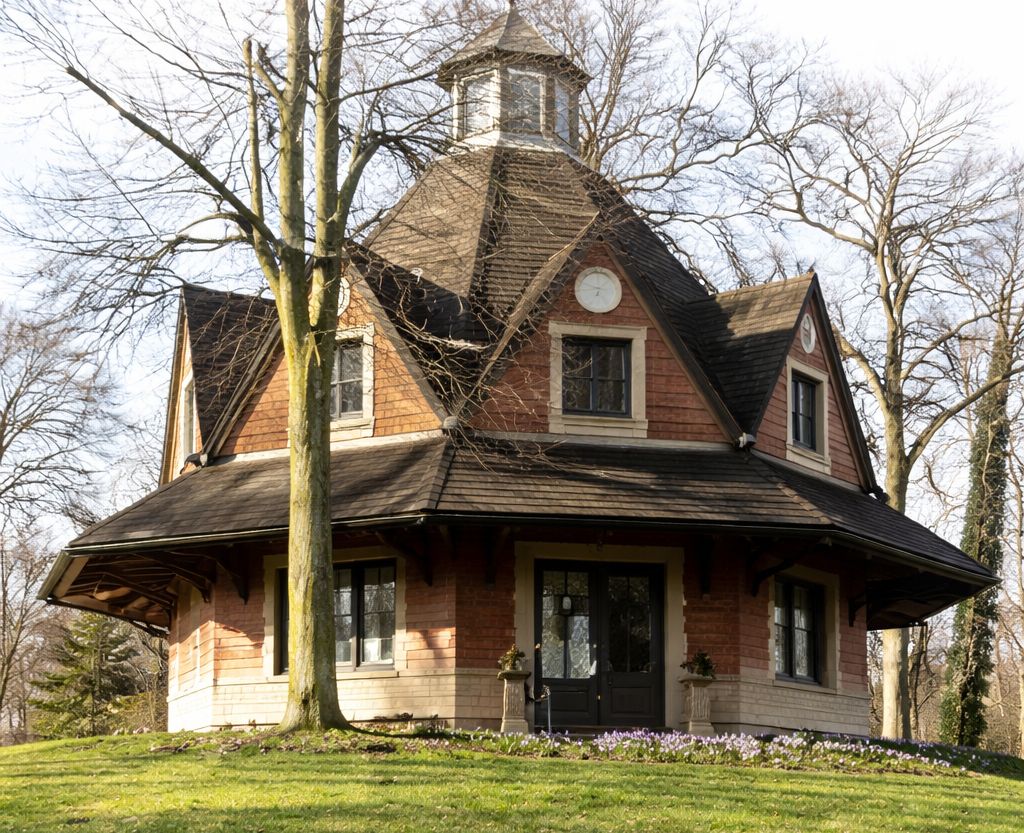
Bournville is one of Birmingham’s most distinctive and internationally recognised districts, created not by chance but by design. It was developed in the late nineteenth century by the Cadbury family as a model village for the workers of their expanding chocolate factory, with the aim of providing healthy, attractive housing away from the pollution and overcrowding of the city centre. The name comes from the old Bourn Brook, which runs through the area, combined with the French word for town, reflecting George Cadbury’s belief in building a place that was both practical and uplifting.
Before Cadbury arrived, Bournville was little more than open countryside with scattered farms and cottages. In 1879 the Cadbury brothers moved their factory from Bridge Street in central Birmingham to the rural land south of Selly Oak, seeking more space and a cleaner environment. Around the factory they laid out wide tree-lined streets, parks and gardens, deliberately avoiding the cramped, grimy housing that characterised much of industrial Birmingham. The houses were designed to be affordable but well built, with gardens, fresh air and access to green space.
The Cadbury factory itself became one of the largest and most important employers in the city. It produced a wide range of chocolate and confectionery that were exported around the world, making the name of Bournville synonymous with quality and innovation. The factory complex included not just production buildings but also dining halls, medical facilities, sports grounds and training schools, reflecting Cadbury’s progressive approach to worker welfare. This philosophy extended beyond the factory gates into the village itself.
Bournville was never intended to be a closed company town. Instead, it was placed under the control of the Bournville Village Trust, which managed housing, green spaces and community facilities to ensure the area developed in line with its founding principles. This protected Bournville from speculative development and helped preserve its unique character. Shops, schools, churches and community halls were built, creating a balanced and self-sufficient neighbourhood.
The area also became a centre for social reform and urban planning. Planners and politicians from around the world visited Bournville to study its layout and ideals, and its influence can be seen in later garden suburbs across Britain. Tree-lined avenues, carefully designed housing and generous open spaces became hallmarks of the district and remain so today.
Although modern Bournville has grown beyond its original boundaries and the Cadbury factory has changed ownership, the area still retains its distinctive identity. Its parks, green spaces and carefully maintained streets reflect the ideals on which it was founded. Bournville stands not just as a place to live, but as a living legacy of a different vision of industrial Britain, one that sought to combine prosperity with social responsibility and a high quality of life.

Selly Manor, one of Birmingham’s oldest surviving timber-framed buildings, stands within the Bournville Estate and forms part of the area’s cultural and historical identity. Originally built in the late medieval period in Selly Oak, the house was rescued from decay in the early twentieth century by George Cadbury, who arranged for it to be carefully dismantled and rebuilt on its present site at Maple Road in Bournville. It was placed within the Bournville Village Trust estate so that it could be preserved for public benefit, reflecting Cadbury’s belief that history, education and community should sit at the heart of the garden village. Today Selly Manor, together with the adjoining Minworth Greaves, operates as a museum and remains one of the most distinctive heritage landmarks within Bournville.
Cadbury World is one of Birmingham’s most visited attractions. Visitors can
explore the history of chocolate and the achievements of the Cadbury brothers.
A large factory shop is also located on site. More information is available at
www.cadburyworld.co.uk







Leave a Reply